Mud silk, also known as Gambiered Guangdong silk or Xiangyunsha (香云纱), is a rare, traditional Chinese silk fabric that gets its distinctive dark color and beautiful texture from a centuries-old dyeing process involving plants, sunlight, and iron-rich river mud.
 How is mud silk made?
- Natural silk is soaked in a tannin-rich extract from the Chinese yam plant (Dioscorea cirrhosa).
- The silk is repeatedly dried in the sun, developing warm reddish-brown tones.
- Iron-rich river mud is applied to the fabric, reacting with the plant tannins and turning the treated surface nearly black.
- The fabric is washed, dried, and finished, creating its characteristic appearance and feel.
What makes it special?
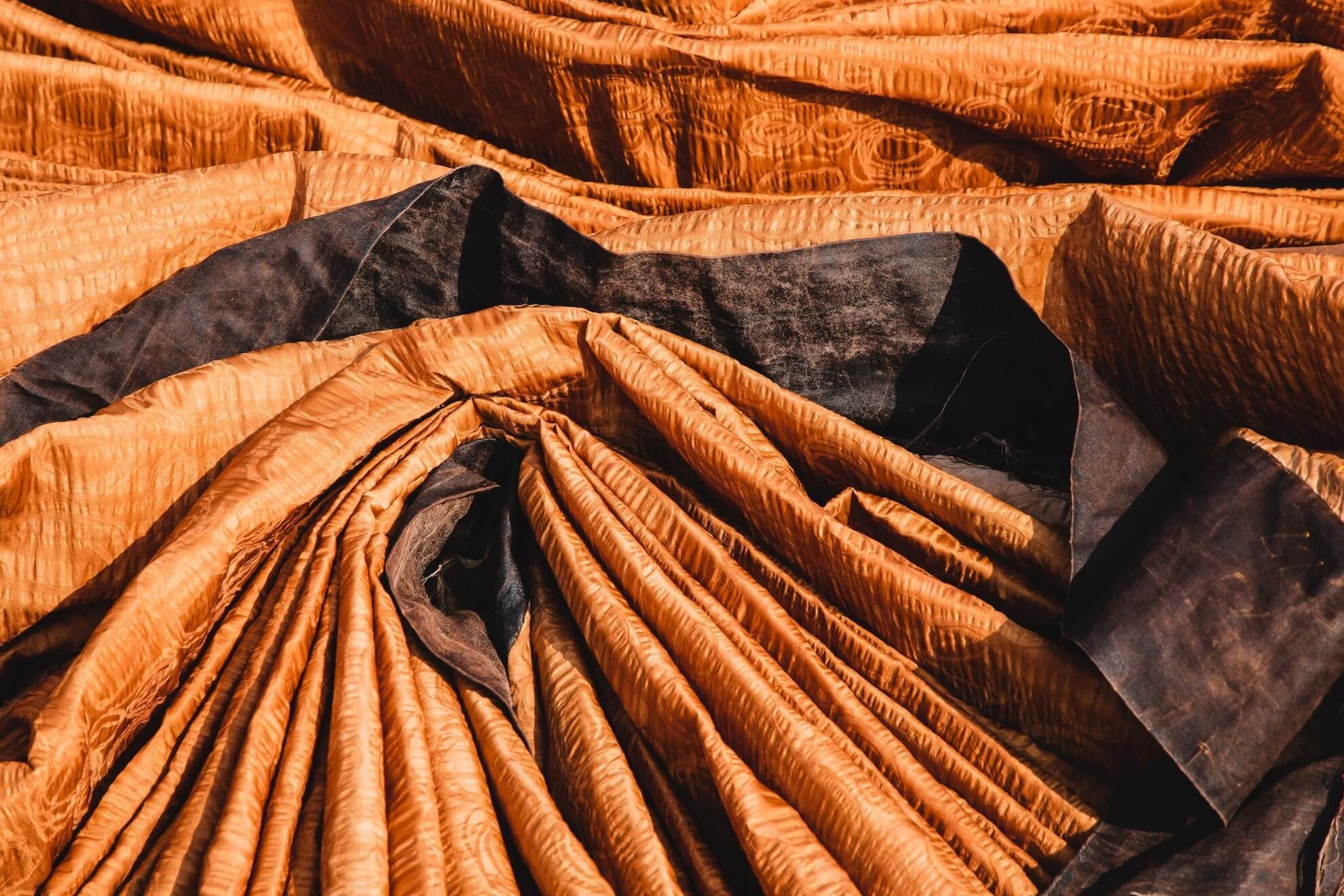
- Two-tone appearance: Often black on one side and reddish brown on the other.
- Unique texture: Smooth, lightweight, slightly crisp, and sometimes almost leather-like.
- Natural sheen: A subtle, elegant luster rather than a glossy synthetic shine.
- Breathability: Comfortable in warm, humid climates.
- Artisanal character: Variations in color and finish make each piece distinctive.
Is mud silk expensive?
Yes. Authentic mud silk is generally considered a luxury textile, because its production is labor-intensive, weather-dependent, and requires specialized craftsmanship. The traditional technique is particularly associated with Guangdong Province in southern China.
How does it differ from regular silk?
Regular silk is typically soft, fluid, and uniformly dyed. Mud silk has a more structured hand, earthy coloring, and a distinctive surface that can soften and develop character with wear. It’s especially beautiful for minimalist clothing, flowing trousers, dresses, jackets, and traditional Chinese garments.
The Mud Silk Story
Where Earth Meets Silk
What if one of the world’s most extraordinary silks owed its beauty not to precious metals or chemical dyes, but to something as humble as earth?
In southern China, along the waterways of Guangdong, there is a centuries-old textile tradition that transforms delicate silk into something truly remarkable. It is called Mud Silk, known in Chinese as Xiangyunsha (香云纱). Its story begins with three simple gifts from nature: a plant, the sun, and the earth.
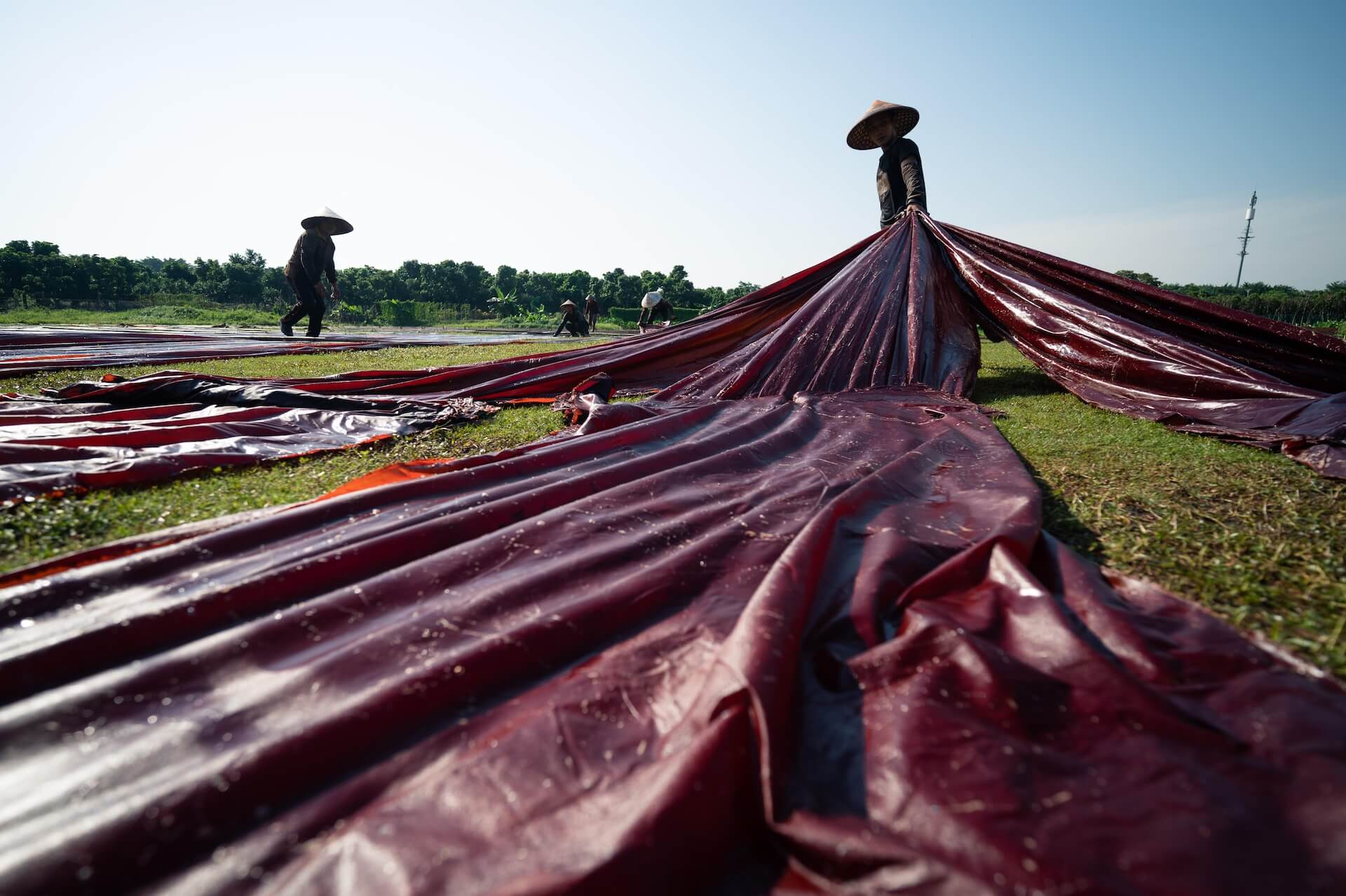 For generations, skilled artisans have immersed fine silk in the rich botanical extract of a native Chinese yam. The fabric is then laid beneath the sun, absorbing warmth and gradually developing deep, earthy tones. This process is repeated many times, patiently building layers of natural color.
Then comes the most surprising part. The silk is treated with mineral-rich river mud. As the iron in the mud reacts with the botanical tannins, a remarkable transformation takes place. The surface darkens to a rich, almost mysterious black, while the reverse often retains its warm, reddish-brown character. What emerges is a fabric unlike any other.
Lightweight yet full of character. Smooth yet subtly textured. Understated yet unmistakably luxurious.
No two pieces are quite the same. Each carries subtle variations shaped by the hands of its makers and the natural elements involved in its creation. In a world of fast fashion and mass production, Mud Silk tells a different story. A story of patience over speed. Of craftsmanship over uniformity. Of working with nature rather than simply trying to control it. Mud Silk is more than a beautiful textile. It is a living connection between ancient knowledge and contemporary elegance.
Born from silk. Transformed by earth. Perfected by time.
This is the beauty of Mud Silk.